Sorting waste might not be the most exciting part of running a business, but it is one of the most important.
Done properly, it helps reduce landfill use, cuts your costs, and keeps your business in line with environmental regulations.
But beyond compliance, waste segregation sets a powerful example.
It shows that your business is thinking long-term and making sustainability a priority.
Find out more about why recycling is important in the workplace in this guide.
Table of Contents
- Why Does Segregating Waste Matter?
- Types of Waste Produced by Businesses
- How to Segregate Waste Properly
- What Happens to Waste After It is Sorted?
- The Benefits of Proper Waste Segregation
- What Should You Do Next?
Why Does Segregating Waste Matter?
One of the biggest reasons to separate waste is so it can be disposed of correctly.
When different types of waste are mixed, most of it ends up in a landfill.
But when sorted properly, waste can be reused, recycled, or turned into something new and useful.
For example, food waste can be processed into compost or converted into biofuel.
The compost can be used to grow new crops, while the biofuel can power transport or be burned to generate energy for homes and businesses, creating a truly circular economy.
Types of Waste Produced by Businesses
Businesses produce a wide range of waste types, depending on the industry.
Offices and warehouses typically deal with large volumes of dry mixed recycling, such as cardboard, plastic packaging, and paper.
These materials are easy to recycle if kept clean and separate.
Food waste is common in hospitality, healthcare, and catering.
Everything from uneaten meals to prep scraps needs to be collected separately, or it risks contaminating other waste.
According to Recorra, “30% of the mixed recycling they process at their Materials Recovery Facility (MRF) is either contaminated with, or simply is, food waste”.
When handled correctly, food waste can be turned into energy; if not, it will go to landfills.
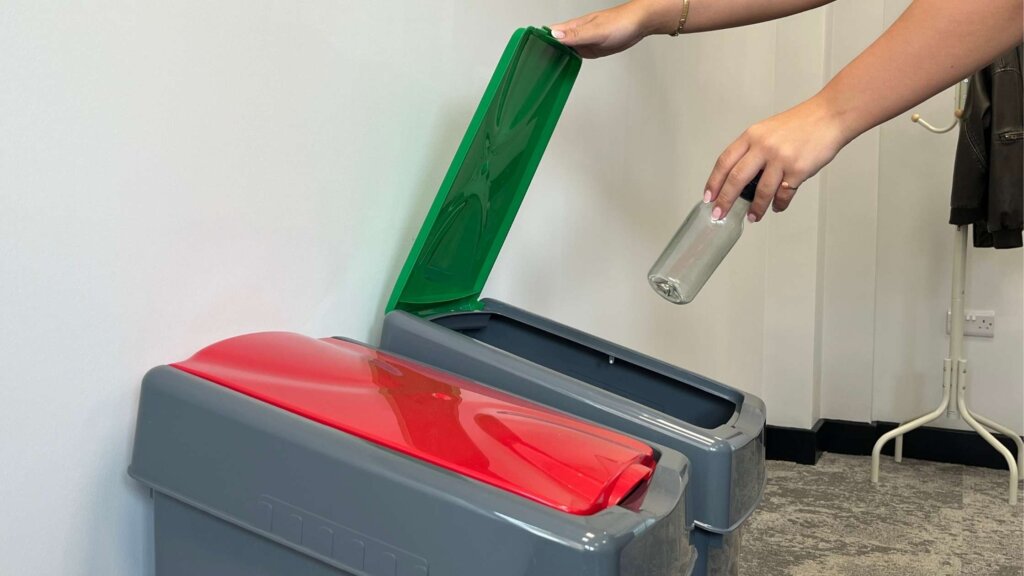
Glass waste, like bottles and jars, is mostly produced by bars, hotels, and restaurants.
It must be collected separately from general waste to avoid contamination and ensure safe disposal.
Remelting glass is one of the most environmentally friendly recycling practices, allowing new products to be created by reusing existing materials, which saves a considerable amount of energy when compared to building new glass from scratch.
In industries like healthcare, laboratories, and manufacturing, hazardous waste is also a concern.
Batteries, chemicals, and solvents must be disposed of safely under strict regulations to protect both people and the environment.
Recent examples of landfill and recycling plant fires have highlighted how dangerous the incorrect disposal of hazardous waste, such as batteries, can be.
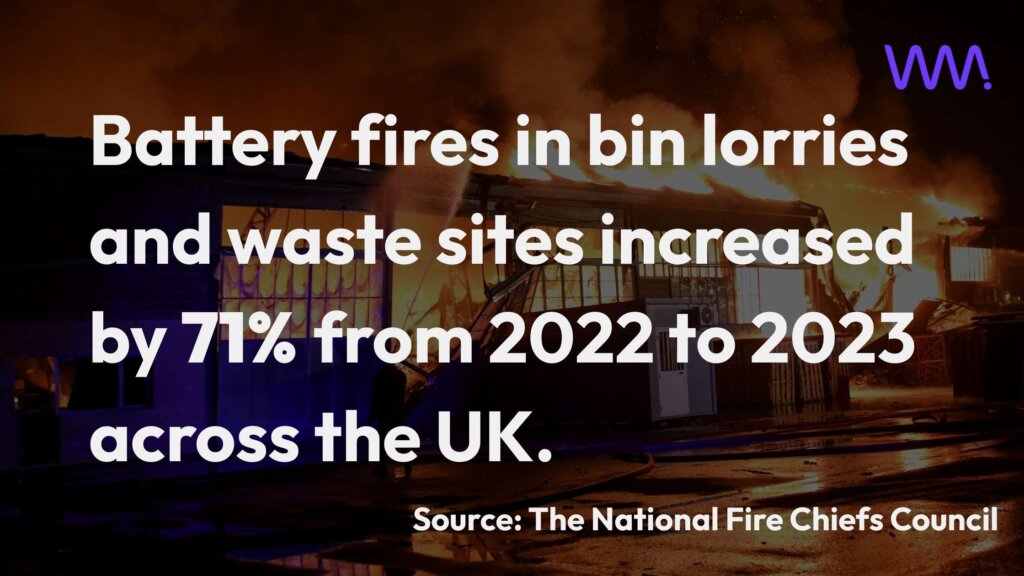
The National Fire Chiefs Council published an article stating that in 2023, there were over 1,200 battery fires in bin lorries and waste sites across the UK, which is a 71% increase compared to 2022.
In addition, QBE has reported that there has been a 46% increase in fires linked to lithium-ion battery fires across the UK in March 2025.
Lithium-ion batteries can be found in electric vehicles and devices such as smartphones.
They are particularly dangerous as fires from these products create their own oxygen; therefore, they can reignite and can even explode if crushed by a truck or while being processed within a recycling plant.
More education is needed to inform the general public and businesses alike on the correct way to dispose of batteries of all kinds to avoid accidents and improve sustainability.
How to Segregate Waste Properly
Effective waste segregation does not have to be complicated.
Here are a few key steps to get it right:
- Use clearly labelled, colour-coded bins for different types of waste.
- Train employees on what goes where and why it matters.
- Place visual guides or signs around bins as reminders.
- Review your waste setup regularly to identify any contamination issues.
Even small mistakes, like putting food in the recycling or glass in the general waste, can result in an entire collection being rejected.
That leads to extra charges, wasted trips, and unnecessary delays – not to mention the environmental impact this then has.
Getting this right can save money and headaches across the board.
Understand what recycling waste can be combined in our What Recycling Waste Goes Together guide!
What Happens to Waste After It is Sorted?
Waste that can be recycled goes to specialist plants where materials are processed to be reused and made into new products such as compost, glass bottles, plastic plant pots, aviation fuel, and much more.
As we recycle more, there are more uses for recycled products being discovered.
For waste that cannot be recycled, it may go to an incinerator, which in turn creates energy from the steam produced, which turns turbines to create power.
This energy can then be stored and used to power homes and businesses.
Other waste, such as sharps waste, can only be disposed of safely if they are properly segregated.
This hazardous waste can also be incinerated, but it can also be destroyed through autoclaving, which involves using pressurised steam to sterilise the waste.
It is then compacted and disposed of in a landfill; however, wherever possible, suppliers are now making every effort to avoid landfill.
Without segregation, items are highly likely to be lost to landfill, and it can take hundreds of years for this waste to biodegrade and break down naturally, which causes lasting harm to our planet and its wildlife.
Over time, this has resulted in extensive environmental damage, disrupting ecosystems and threatening biodiversity. It is a reminder of why sustainable waste management is critical for our future.
The Benefits of Proper Waste Segregation
Doing this well brings more than just environmental points.
It saves your business money by reducing contamination charges and helps waste collections run smoothly. It also keeps you compliant with changing regulations, such as Simpler Recycling.
- Reduced disposal costs and fewer fines
- Improved reputation with customers and clients
- Stronger team morale from being part of a sustainability-driven workplace
Waste segregation is a small step that can add up to a big change for your business and the planet.
What Should You Do Next?
If you are ready to get more value out of your waste strategy, now is the time to act.
A waste audit can uncover exactly what is going to landfill, highlight areas of inefficiency, and show you how to cut costs while boosting your recycling performance.
At Waste Managed, we work with businesses across the UK to simplify their waste services, stay ahead of legal changes, and avoid the hidden costs that come from poor segregation and missed collections.
Whether you are just getting started or need a complete reset, we will build a tailored plan that works for your business.
From bin set-up to flexible collections and everything in between, we make waste simple, compliant, and cost-effective.
See how one of our clients has benefited from streamlining their waste and auditing their existing set-up to save money and improve processes in our Case Study Showcase!
Ready to get a quote? Get in touch today!