
As the UK works towards its Net Zero target by 2050, businesses are under increasing pressure to understand and comply with waste management regulations and manage resources more responsibly.
Meeting these environmental goals requires significant changes across all industries. The traditional linear “take, make, dispose” model is being replaced by a circular approach, where materials are reused, recycled and recovered wherever possible.
For UK businesses, this means understanding their legal responsibilities and implementing an effective, compliant waste strategy.
Waste disposal regulations must not be ignored, as environmental protection and public health are under closer scrutiny than ever.
Businesses that fail to comply with waste legislation may face enforcement action, substantial fines or prosecution.
This guide explains the basics of UK waste management regulations, who enforces them, and what your legal responsibilities are as a commercial waste producer.
Make sure you understand the basics of UK commercial waste disposal regulations to keep your business compliant and only work with trusted, licensed suppliers.
Building a compliant waste management strategy for your business
Understanding waste management regulations is only the first step. To remain compliant in the long term, UK businesses need a clear, practical waste management strategy that covers how waste is stored, collected, documented and disposed of.
An effective commercial waste strategy should ensure that:
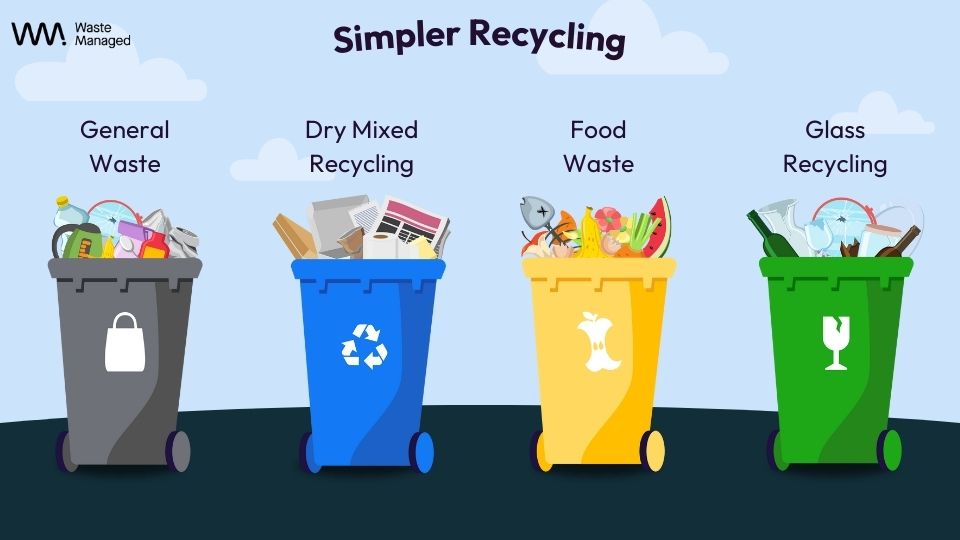
- Waste is segregated correctly to support recycling and recovery.
- Collections are carried out by licensed waste carriers.
- All legal documents, including waste transfer notes, are completed and retained.
- Services can adapt as your business grows or changes.
For many businesses, managing these requirements internally can be time-consuming and complex. Working with an experienced commercial waste partner helps ensure your waste management processes remain compliant with UK waste legislation, while reducing administrative burden and operational risk.
By using a trusted provider to manage collections, documentation and supplier compliance, your business can demonstrate a proactive approach to waste management regulations –— helping protect your organisation, your reputation and the environment.
Who enforces waste management regulations in the UK?
In the UK, waste management regulations are enforced by a range of national and local regulatory bodies.
Here are the key organisations involved:
- Environment Agency (EA): The Environment Agency regulates waste activities in England, including permitting, hazardous waste controls and enforcement.
- Natural Resources Body for Wales (NRW): NRW is the principal environmental regulator in Wales, enforcing waste management regulations and issuing permits.
- Scottish Environment Protection Agency (SEPA): SEPA regulates waste management activities and compliance in Scotland.
- Northern Ireland Environment Agency (NIEA): NIEA is responsible for enforcing waste legislation and environmental protection in Northern Ireland.
- Local Authorities: Local councils support enforcement at a local level and may investigate waste offences within their area. Some local authorities, such as Bristol City Council, also introduce additional policies to improve recycling and waste reduction.
These organisations work together to monitor waste disposal activity, encourage responsible waste practices, and enforce compliance with UK waste legislation.
Businesses that fail to meet their legal duties may be subject to inspections, enforcement notices, fines, or prosecution.
Legally disposing of your commercial waste
Commercial waste produced by your business must be managed responsibly from the moment it is generated until it is passed to a licensed waste carrier or disposal site. This legal duty applies to all businesses, no matter the size, and forms a core part of your obligations under UK waste management regulations.
This responsibility is known as your duty of care under UK waste management regulations.
Your duty of care as a business
Under UK law, you must take all reasonable steps to ensure your business waste does not escape your control and is handled safely and securely. This includes:
- Minimising waste by preventing, reusing, recycling or recovering materials where possible.
- Sorting and storing waste securely in suitable containers.
- Checking that anyone collecting or disposing of your waste is a registered waste carrier.
- Completing a waste transfer note (WTN) for each load of waste that leaves your premises.
- Keeping copies of all waste transfer notes for at least two years and presenting them to enforcement officers if required.
A waste carrier that is not registered may be disposing of waste illegally, and as the producer, you could still be held responsible if this results in an offence.
Why this matters for compliance
Failing to meet your duty of care can lead to enforcement action from local authorities or environmental regulators. Penalties can include fixed penalty notices, fines or, in serious cases, prosecutions. Ensuring that your waste is collected by a properly registered service and that all documentation is in order helps protect your business and clearly demonstrates compliance with commercial waste disposal regulations.
Penalties for breaching UK waste legislation
Businesses that breach waste management regulations may face enforcement action or prosecution.
Possible penalties include:
- Fixed penalty notices (typically £300)
- Unlimited fines in serious cases
- Up to 12 months’ imprisonment in a Magistrates’ Court
- Up to 5 years’ imprisonment in the Crown Court
A common misconception is that responsibility ends once waste is placed in a bin. Your duty of care continues until the waste is transferred to a licensed carrier.
For more detailed guidance on environmental legislation and commercial waste responsibilities, visit GOV.UK’s commercial waste disposal guidance.
Duty of care under waste management regulations
The duty of care applies to anyone who produces, stores, transports, treats or disposes of controlled waste in the UK.
This includes:
- Waste producers
- Waste carriers
- Waste brokers and dealers
- Waste managers
Each party must take reasonable steps to prevent waste from being mishandled, illegally disposed of or fly tipped.
Waste activities covered by waste management regulations
UK waste management regulations apply to a range of waste activities throughout the waste lifecycle.
Recovery
Recovering waste involves extracting materials or energy for reuse or recycling.
Preparing for re-use
This includes cleaning, repairing or refurbishing discarded items so they can be reused without further processing.
Recycling
Recycling does not include energy recovery through incineration.
Disposal
Disposal includes landfill and other processes where recovery does not occur.
About the Author

Steve Traviss
Procurement & Sustainability Officer
Steve Traviss is a Chartered MCIPS and is deeply passionate about environmental responsibility and sustainable waste-disposal practices. He embodies the values we stand for at Waste Managed, combining real-world industry experience with a strong understanding of UK waste management regulations and environmental legislation.
In 2022, Steve took part in a world-record scuba beach clean-up in Thailand — an achievement we are incredibly proud of and a reflection of his commitment to protecting the environment beyond the workplace.
Steve draws on his extensive knowledge of the waste management industry to provide clear, practical guidance that helps UK businesses stay compliant and make more sustainable waste choices.