

Takeaway Waste Collection And Disposal
Because takeaways generate a wider range of waste than most other business types, getting the right combination of bins and collection frequency is essential for keeping your premises hygienic, safe and legally compliant.
Types Of Takeaway Waste
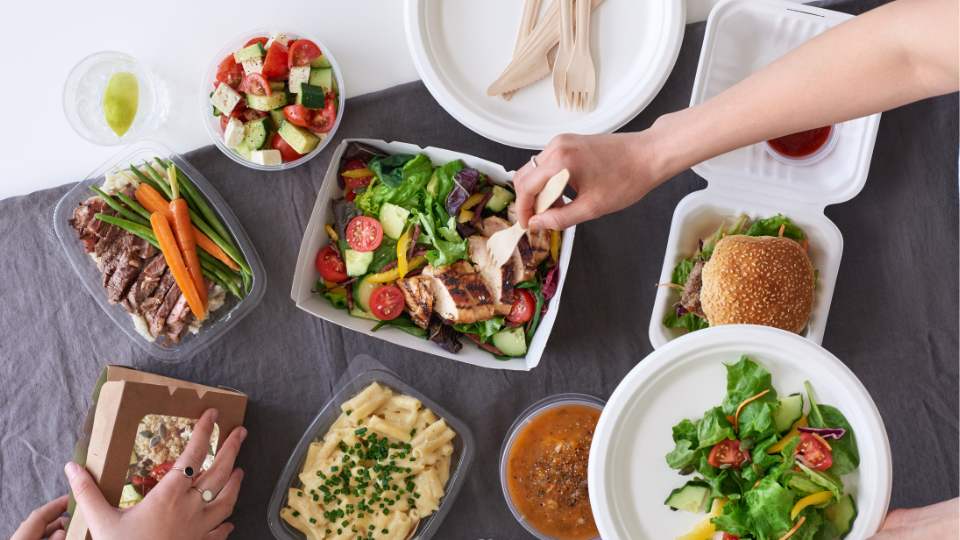
Most takeaways deal with several waste types, and knowing which is which, as well as knowing how to dispose of each, will make collections far simpler. Here are the main types of waste most takeaway establishments will likely produce, with examples.
- Food waste = scraps, peelings and spoiled stock from food preparation
- Packaging and cardboard waste = pizza boxes, paper bags and sachets
- General waste = contaminated or non-recyclable items that can’t go elsewhere
- Sanitary waste = hygiene waste from staff and customer toilets
- Dry mixed recycling waste = cleaned and dried materials like cardboard, cans and bottles
* Food waste and used cooking oil need particularly careful handling. Both are treated differently to general rubbish under UK law.
Takeaway Waste Collection
The frequency of your bin collections will depend on the volume you produce. Daily collections suit busy kitchens producing large amounts of food waste, while smaller takeaways often manage well with weekly or fortnightly pickups.
At Waste Managed, we begin all our accounts with a waste audit, which looks into what you produce, how much you produce, and where space allows for storage on site. From there, we recommend the best bins for you and the schedule that will fit in with you, rather than putting you on a generic package that doesn’t suit your business.
All our bins are provided free of charge and will be delivered to you. Our bin size guide can give you a sense of what you might need before we talk. Finally, if your output changes, whether you anticipate a quieter winter or an influx over a bank holiday weekend, your service can scale up or down with you.
Takeaway Waste Disposal
There are a few different ways that waste can be disposed of. For example, food waste, the main waste type of takeaways, will typically go for anaerobic digestion or composting, where it’s broken down to generate energy or create a soil improver, rather than sent to landfill.
Alternatively, dry mix recycling, including cardboard, plastics and cans, go to a recycling facility to be sorted and reprocessed into new materials.
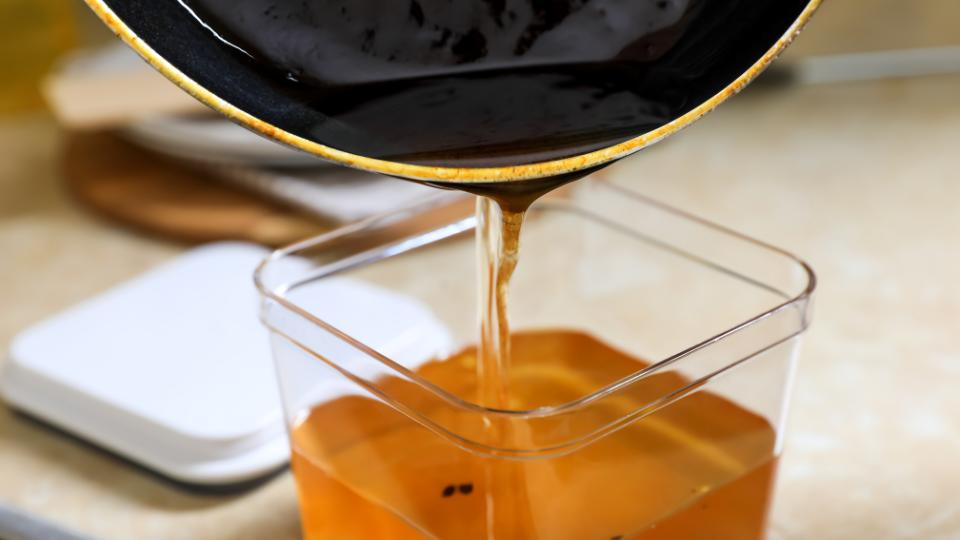
Used cooking oil follows its own route entirely, and it’s important for takeaway establishments to separate the oil from all other waste types. Once segregated correctly, it can be collected and sent to be recycled into biodiesel, giving a waste product from your fryer a genuine second life as fuel.
Takeaway Waste Regulations
Running a takeaway comes with specific legal responsibilities for how you handle waste.
Under Simpler Recycling, businesses in England (with 10 or more full-time-equivalent employees) must separate food waste and dry mixed recyclables from all general waste. These rules came into force on the 31st of March 2025, but smaller businesses (those with fewer than 10 employees) have until the 31st of March 2027 to do the same.
The Food Standards Agency provides guidance that used cooking oil must never be poured down a drain or a business may face potential prosecution. It also needs to be stored securely in a dedicated container and collected by an authorised waste carrier, who’ll take it away for recycling.
More broadly, every business has a Duty of Care for its waste from the moment it’s produced. That means using a carrier registered with the Environment Agency.
Takeaway waste regulation can seem a little daunting. However, when you take out a waste management plan with Waste Managed, we can take care of all the paperwork for you. This allows takeaway owners and managers to stay compliant without needing to track every detail.
What Our Experts Say

“Takeaway waste can be some of the most varied waste that all needs to be dealt with in the right way. Food, packaging, plastics, oil, all can often be produced in high volumes within a small working space. There’s also the added pressure of mounting waste since food waste left too long between collections can quickly become a problem for staff and customers alike.
That’s why we always start with an audit rather than a standard package. At Waste Managed we want to understand exactly what your takeaway produces, and how often you need your waste collected and disposed of. With that knowledge we can recommend the right bins and a suitable schedule that will match your business, rather than leaving owners over-paying for capacity they don’t need or running short between collections.” – Steve Traviss, Procurement Director
Takeaway Waste Bins We Can Provide
Waste Managed can supply standard 240L, 360L, 660L and 1100L commercial wheelie bins for various waste types including, general waste, recycling, glass and food waste, alongside specialist sanitary bins for staff and customer toilets. Although, food waste bins tend to be 240L for health and safety reasons.
The correct bin size for you will depend on your waste volume and how much space you have to store bins between collections. Your initial waste audit helps provide a guide on bin sizes that are the right fit, so you’re not left guessing or paying for more capacity than you need.
We also understand that businesses want to grow, and while you do, your waste volumes may fluctuate, so we’ll happily adjust your bin allocations to match, all without disrupting your existing service.
What Our Clients Say
Waste Managed Are Experts In Takeaway Waste Management
Waste Managed now has over 40,000 customers, and with over 15 years’ experience, we’ve built a deep and robust understanding of what takeaway and fast-food businesses need from a waste management provider.
But don’t just take our word from it. We’re proud to hold over 7,800 five-star ratings on Trustpilot from our customers located across the UK.