


Laboratory Waste Collection And Disposal
It is critical that laboratories have the right waste management system in place. To do this, Waste Managed begins all partnerships with understanding exactly what your lab produces. From there, we can recommend the right bin size for the types of waste your lab produces, build a collection schedule around the way you work, and make sure everything is disposed of through the correct, licensed route.
Laboratory Waste Collection
Our waste management process begins by assessing exactly the type of waste your laboratory produces as well as the amount and frequently. Once we have a full understanding, we then build a collection schedule around you rather than a generic template. That means we can tailor service around a lab that needs several collections a week or one that just requires occasional ad hoc pickups.
All our bins are delivered free of charge, and we’ll help you choose the right bin sizes for each waste stream. If your lab waste can fluctuate throughout the year, we can adjust your bin types and quantities at any time.
Laboratory Waste Disposal
Once we have collected your waste, each individual waste type then follows its own licensed disposal route. Clean recyclables go to a dedicated recycling facility, while hazardous and biological waste will be sent for specialist treatment or incineration.
With laboratories producing potentially harmful waste, we make sure that every collection is not only fully traceable, but that all the legal paperwork is handled for you.
Whatever your lab produces, you can be confident it’s dealt with safely and legally.
Types Of Laboratory Waste
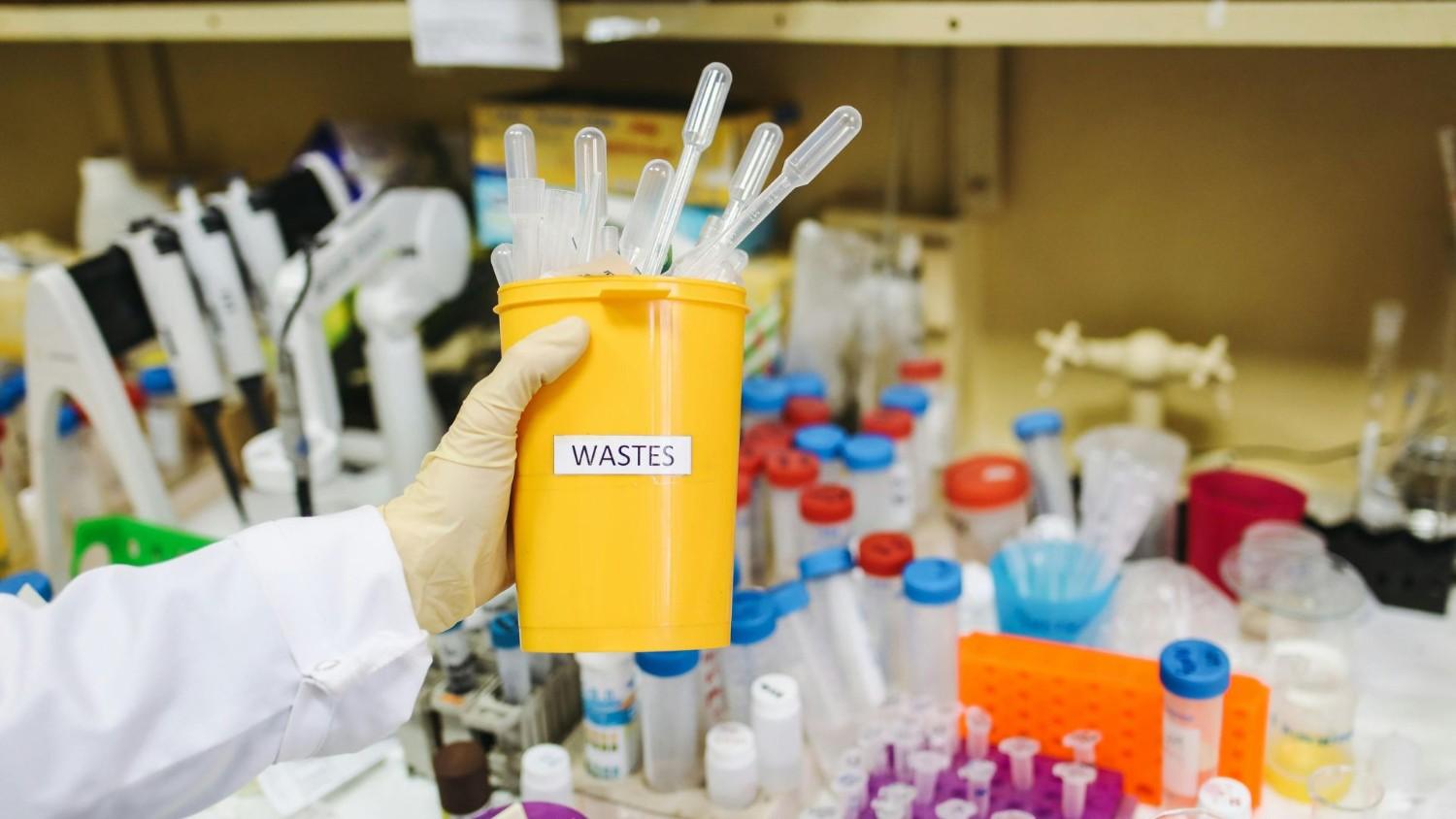
There are many different types of waste a laboratory can produce, and it’s very important that all individual types are segregated correctly to prevent compliance and safety risks. Here’s a quick breakdown of what each lab waste means and how you store and dispose of it.
General Waste
General waste covers everything that cannot be easily sorted or recycled, including non-recyclable plastics and packaging and soiled paper.
Dry Mixed Recycling
Dry mixed recycling (sometimes shortened to DMR) is a system whereby multiple types of recyclable materials, such as cardboard, paper, plastic and metal (tin and aluminium), are stored and collected together, then separated for individual recycling at a Materials Recovery Facility (MRF).
Glass Waste
Glass waste covers any empty, uncontaminated glassware that can be recycled as standard glass waste. If glass is broken or contaminated, it must go into your sharps or clinical stream instead, never the recycling bin.
Sharps Waste
Sharps waste is commonly associated with pharmaceutical contexts, but businesses in all industries can generate this type of waste. It includes items such as needles, blades and any broken glassware contaminated with biological or chemical material. These items should go straight into a puncture-proof, colour-coded container and never a standard bin.
Hazardous And Chemical Waste
Hazardous and chemical waste such as solvents, reagents, acids and bases fall under hazardous waste rules. The COSHH regulations require these to be risk-assessed and segregated by compatibility, since mixing incompatible chemicals can be dangerous.
Clinical Waste
Clinical and medical waste includes anything that could be harmful to people or the environment. Because the waste type is toxic or potentially infectious in nature, it needs to be handled in a regulated way to make sure that it doesn’t pose a risk to anyone in your business or the public.
Sanitary Waste
Sanitary waste (also known as offensive waste or hygiene waste), includes nappies, feminine hygiene products, incontinence pads, and any waste that has been soiled by non-infectious bodily fluids. The difference between sanitary and clinical waste is when the waste is infectious and therefore becomes classed as clinical waste.
Laboratory Waste Regulations
It won’t be a surprise to learn that laboratories operate under some of the strictest waste regulations in any UK sector. Here are a few of the rules and regulations laboratories, and all other businesses that produce the same waste, need to follow.
COSHH
The Control of Substances Hazardous to Health Regulations (also known as COSHH) requires businesses and employers to correctly plan, manage and monitor the use of chemicals, micro-organisms and other substances hazardous to health.
Environmental Protection Act 1990
You also need to carry a duty of care under the Environmental Protection Act 1990, which covers the safe storage, transport and disposal of all classified waste types.
The Hazardous Waste (England and Wales) Regulations 2005
Hazardous waste, unlike other waste types, comes with extra rules on top of those outlined in the Environmental Protection Act 1990. The Hazardous Waste (England and Wales) Regulations 2005 set out what you need to do in order to control and track the movement of hazardous waste. This includes how it’s classified, documented with consignment notes, and collected only by a registered carrier.
Radioactive Substances Act 1993
If your lab handles radioactive material, the Radioactive Substances Act 1993 adds further requirements to regulate the keeping, use, and disposal of this waste type.
What Our Experts Say

“Laboratories handle a large mix of tightly regulated waste, and you need to know how to correctly manage everything from dangerous sharps and clinical waste all the way through to simple dry mixed recycling and general waste. Getting segregation right from day one makes everything that follows easier. Our job here at Waste Managed is to take all that complexity off your hands, providing you with the right bins, the right schedule, and taking away the stress of the paperwork so you can have that extra peace of mind that all your waste has been handled compliantly.” – Steve Traviss – Procurement Director
Laboratory Waste Bins We Can Provide
Having the right containers for your waste management is just as important as having the right collection schedule. Due to the mix of waste types, laboratories usually benefit from a variety of general waste and recycling bins, alongside additional dedicated sharps containers and hazardous waste bins for clinical and sanitary waste. We can also provide your lab with food waste bins, perfect for staff kitchens.
All our containers are supplied free of charge as part of your service, and we’ll help you work out the right bin sizes for your output. Getting this combination right is what keeps your waste correctly segregated and your lab compliant, making waste management simple and easy.
What Our Clients Say
Waste Managed Are Experts In Laboratory Waste Management
With more than 40,000 customers and over 15 years’ experience, Waste Managed has supported businesses, including laboratories, of every size across the UK. We have nationwide coverage and licensed suppliers so wherever your business is located, we’ve got you covered.
We never apply a one-size-fits-all plan. Every waste management partnership starts with a comprehensive audit of what your business actually produces, so you only pay for what you need. This level of detail is only part of why we’ve amassed over 7,800 five-star reviews on Trustpilot.
If you are ready to simplify your laboratory waste management, get in touch for a tailored quote.