Sharps waste refers to any waste material that contains items capable of puncturing or cutting skin or a surface, such as needles, syringes, scalpels, and broken glass. To ensure all sharps waste is disposed of safely, securely, and legally, place these items in the correct colour-coded sharps waste bin, store them securely, and have a licensed waste carrier collect them. Most sharps waste items will be either sterilised or incinerated at an authorised treatment facility after collection. Businesses that produce sharps waste have a legal responsibility to manage and dispose of it correctly to avoid risk of injury or injection.
If handled incorrectly, sharps waste poses a significant health and safety risk to those in close contact with it, which is why understanding how to manage sharps waste safely is essential to protecting staff, patients, and the wider environment. This guide explains what sharps waste is, which waste disposal bins you need, how sharps waste removal works and what happens to it after collection.
At Waste Managed, we provide free sharps bins and a tailored collection service, helping businesses maintain a safe, compliant waste disposal process.
Table of Contents:
What is Sharps Waste?
Sharps waste refers to any material or object with sharp edges or points that can puncture, cut or penetrate the skin and requires specialist disposal. Common examples of sharps waste include needles, syringes, scalpels, lancets, broken glass and other sharp objects used in healthcare, veterinary, laboratory and cosmetic settings.
Because of the risk of injury and, in some cases, infection transmission, sharps waste is considered a potentially hazardous waste stream and must be handled securely. Even items that may initially appear harmless can pose a risk to staff, waste handlers or anyone in proximity to sharps waste if it is disposed of incorrectly. Because of these risks, businesses must ensure all sharps waste is segregated, stored, and disposed of separately from other waste streams using approved sharps waste disposal bins and licensed collection services.
Read more about sharps injury prevention in our guide.
Check Out Our Sharps Waste ServicesWhat are Sharps Bins?
A sharps waste bin is a specialised container designed to safely store and contain hazardous sharp objects before collection and disposal.
Unlike standard containers for other waste streams, sharps waste disposal bins are made from puncture-resistant materials and include secure locking lids to help prevent spills, leaks, accidental access, exposure, or contact.
Key features of sharps waste disposal bins include:
- Durable puncture-resistant construction
- Tamper-resistant locking mechanisms
- Leak-resistant design
- Clearly identifiable colour-coded lids
- Availability in multiple sizes
- Compliance with healthcare waste regulations
What Can Go in a Sharps Bin?
Typical items accepted in a sharps waste bin include:
- Disposable scalpels
- Razor blades
- Hypodermic needles
- Tattoo needles
- Piercing needles
- Syringes
- Lancets
- Insulin pens
- Broken glass
- Broken plastic capable of puncturing skin
- Dental sharps
- Surgical pins
- Staples
- Scissors
- Metal wiring
- Bone and tooth fragments generated during clinical procedures
Carefully assess any item capable of causing a puncture wound and dispose of it in the correct sharps waste stream.
Which Sharps Bins Do I Need?
Different types of sharps waste require different containers. Selecting the correct sharps waste disposal bin helps ensure safe handling and compliant disposal.
| Lid Colour | Suitable Waste Type |
| Orange | Non-medicinal sharps |
| Yellow | Sharps contaminated with medicines |
| Purple | Sharps contaminated with cytotoxic or cytostatic medicines |
Non-pharmaceutical sharps bins – (Orange Lid)
Orange-lidded sharps bins are used for non-pharmaceutical sharps, including tattoo needles, piercing needles and other sharps that have not come into contact with medicinal products.

Sharps contaminated with medicinal products – (Yellow) Lid
Yellow-lidded sharps bins are designed for needles, syringes and other sharps contaminated with medicinal products.

Sharps contaminated with hazardous chemicals – (Purple Lid)
Purple-lidded sharps bins are used for cytotoxic- or cytostatic-contaminated sharps and require specialist sharps hazardous waste disposal.

Choosing the wrong bin can create compliance issues and potentially increase disposal costs.
How to Dispose of Sharps Waste Safely
Proper sharps waste disposal follows a straightforward process:
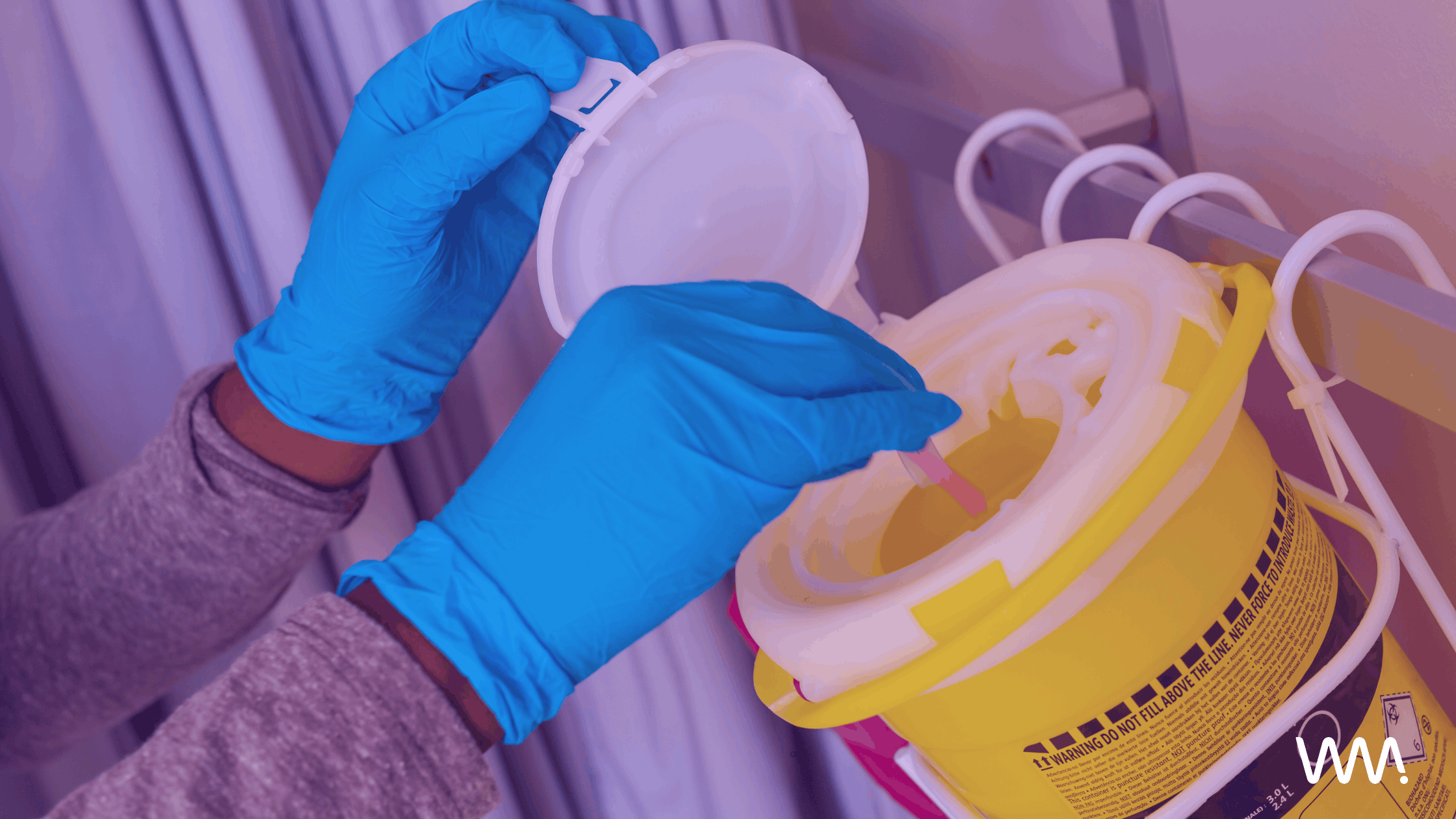
- Place sharps directly into the appropriate sharps waste bin.
- Never attempt to bend, snap or break needles.
- Keep containers upright and secure.
- Do not overfill the bin.
- Seal the container once it reaches the fill line.
- Arrange collection with a licensed sharps waste removal provider.
- Ensure waste is transported to an authorised treatment facility.
Businesses that follow these steps help minimise injury risk while ensuring compliance with waste legislation.
Where Should I Store My Sharps Waste Disposal Bins?
Because this type of waste poses a significant health and safety risk to humans and animals, you need to store it safely. Store sharps waste disposal bins in secure locations away from public access.
We recommend:
- Using wall-mounted bins where possible
- Keeping containers away from children and animals
- Storing bins in designated sharps or clinical waste areas
- Ensuring containers remain upright
- Locking or sealing bins when required
After disposing of your sharps waste, remember to lock or seal the bin/container. Sharps waste bins should never be left accessible to unauthorised persons or in locations where they could be knocked over and risk exposure.
Which Businesses Need Sharps Bin Disposal?
Businesses which need sharps disposal include:
- Healthcare facilities
- Pharmacies
- GPs
Any business generating needles, blades or similar materials should have an appropriate sharps waste disposal solution in place.
How is Sharps Waste Disposed Of?
Sharps waste is disposed of through sterilisation or high-temperature incineration. The exact treatment method depends on the type of sharps waste and whether it contains potentially contaminated substances.
Non-medicinal sharps may be disinfected using specialised treatment systems such as autoclaves before final disposal. Medically contaminated sharps generally require incineration to eliminate potential biological hazards. This process ensures sharps waste is managed safely and prevents risks to human health and the environment.
How Do You Dispose of Needles and Syringes?
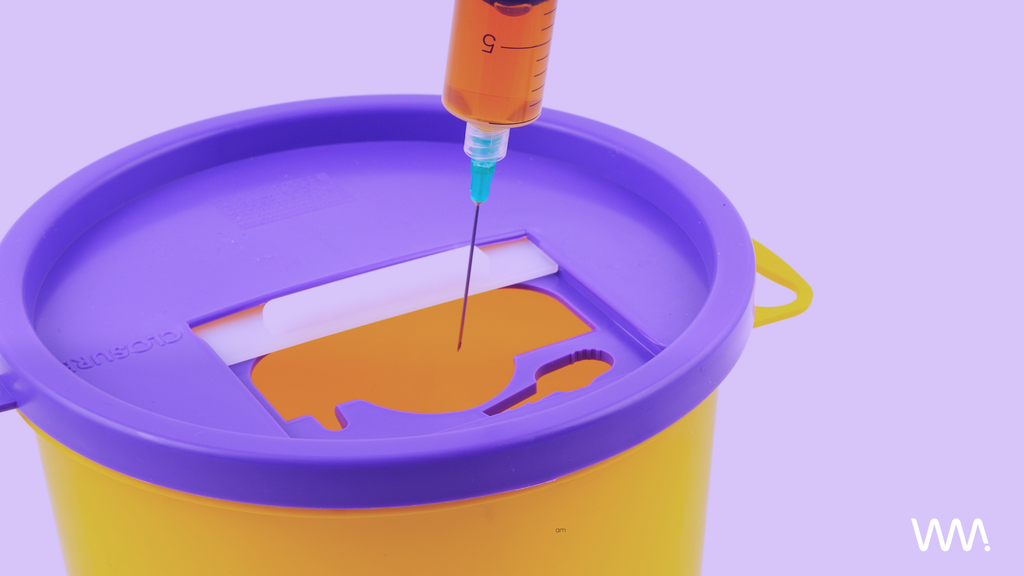
Place needles and syringes directly into an approved sharps waste bin, also known as a lock-lid sharps bin, immediately after use. They should never be placed into general waste bins, recycling containers or clinical waste bags. Whether needles and syringes have been contaminated with medical substances determines whether they’re incinerated or disinfected. Once collected, contaminated needles and syringes are generally incinerated, while some non-medicinal sharps may be sterilised and treated.

When Should Sharps Bins be Disposed Of?
Sharps bins should generally be disposed of when they reach approximately three-quarters full. This minimises the chances of injuries or cross-contamination during waste pickup and ensures compliance with the relevant waste disposal laws.
Overfilling increases the risk of:
- Needlestick injuries
- Spillages
- Cross-contamination
- Collection difficulties
- Regulatory breaches
Businesses should also avoid storing filled sharps bins for extended periods. Depending on waste volumes, weekly, fortnightly or monthly sharps waste collections may be appropriate.
At Waste Managed, we can provide weekly, bi-weekly, or monthly services to help manage your waste loads! Call our team at 01205 338 123 and get a free quote today!
What Happens to Sharps Waste After Collection?
The journey typically follows four stages:
| Stage | Process |
| Collection | Collected by a licensed waste carrier |
| Transport | Taken to an authorised treatment facility |
| Treatment | Sterilised or incinerated |
| Final Disposal | Residual waste safely managed |
The exact treatment method depends on the waste classification and the type of sharps waste. Each stage of the disposal and collection process is designed to minimise risk, maintain compliance, and protect public health.
Are Sharps Hazardous Waste?
Infected sharps are classified as hazardous or specialist waste. They must be stored, collected, and disposed of safely to minimise risk to people and the environment. Items contaminated with infectious substances, pharmaceutical products, or certain chemicals pose a health and safety risk to anyone in close contact with them. They should therefore be handled and disposed of securely and safely.
Examples include:
- Used hypodermic needles
- Medicated syringes
- Cytotoxic sharps
- Clinical sharps contaminated with bodily fluids
Because hazardous sharps waste carries health and safety risks, licensed providers must follow proper disposal, storage, and collection procedures.
Common Sharps Waste Disposal Mistakes to Avoid
Many compliance issues stem from avoidable mistakes. Common examples include:
- Placing sharps in general waste bins
- Using the wrong colour-coded container
- Overfilling sharps bins
- Leaving bins unlocked
- Delaying collections
- Storing bins in unsuitable locations
- Failing to train staff on disposal procedures
Avoiding these mistakes helps protect employees, patients and waste handlers while reducing legal and operational risks.
What Are the Laws Regarding Sharps Bins?
The two most important laws and regulations to be aware of for sharps waste disposal are:
Health and Safety (Sharp Instruments in Healthcare) Regulations 2013 and 2015 – all employees likely to come into contact with sharps should receive training. Sharps must also be labelled and stored in secure containers.
Hazardous Waste (England and Wales) Regulations 2005 – any waste which is deemed to be hazardous for humans, animals or the environment must be stored securely before disposal.
How Can I Get Sharps Bins and Arrange Collections?
With our services, Waste Managed will provide your sharps bins for free and arrange a collection schedule suited to your business and operational needs.
Our experienced team can help you:
- Select the correct sharps waste disposal bins
- Maintain legal compliance
- Arrange convenient collection schedules
- Reduce disposal costs
- Manage hazardous waste safely.
Whether you require weekly, fortnightly or monthly sharps waste removal, we can create a tailored solution for your business.
Request a free quote today or speak to our team on 01205 338 123.
Conclusion
Sharps waste disposal plays an important role in maintaining a safe, compliant and professional working environment. Whether you work in a healthcare facility, dental practice, tattoo studio, or anywhere that generates sharps waste, it is vital to use the correct sharps waste bin and follow proper disposal procedures to minimise the risk of injury, contamination, and legal issues. By taking the right measures to store sharps waste securely and collect it regularly, businesses can protect people and the environment while meeting their duty of care obligations.
Waste Managed provides free sharps bins and reliable nationwide collection services, helping organisations manage sharps waste safely, compliantly and cost-effectively.
Get a Quote